The International Society for Asphalt Pavements (ISAP) Conference 2024
Highlights from the ISAP 2024 Conference in Montreal
The International Society for Asphalt Pavements (ISAP) Conference was held in Montreal, Canada in 2024, hosted by the École de Technologie Supérieure (ETS). This conference is a premier event in the field of asphalt pavements. Hands down, this has been the best conference I have attended so far in my career. The organization was impeccable, the venue was excellent, and the technical sessions were outstanding. We were in Montreal! Known for its rich history, vibrant culture, and beautiful architecture. I submitted a presentation for this conference related to my MS thesis work on the Impact of Dynamic Wheel Loading on Pavement Responses". Details of the presentation are provided in Table 1 below.
| Description | Presentation | Authors | Date and Time |
|---|---|---|---|
|
Lectern Session Numerical Modeling of Materials and Pavement Structures |
Impact of Vehicular Maneuvering and Dynamic Loading on Flexible Pavements | Johann Cardenas Imad Al-Qadi |
Hilton Montréal Convention Center Wednesday, Jun 05 10:15 AM - 12:00 PM |
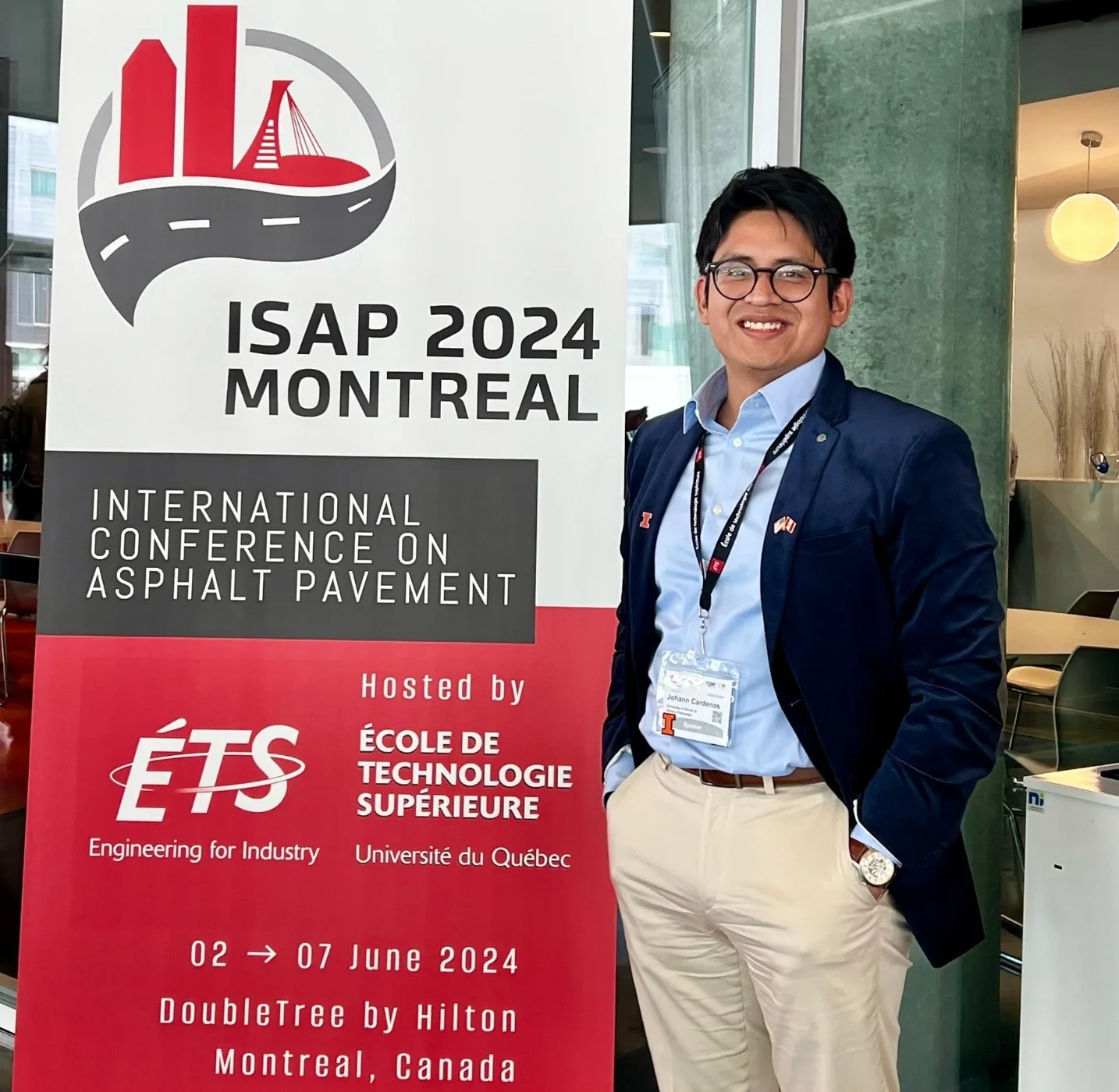
This was my 1st time attending the ISAP conference, and I had heard great things about it from colleagues. The weekend kicked off strong. On Sunday, June 2, we attended the airport workshop at ÉTS, where representatives from both FAA and ICAO presented on airfield pavement design. As someone working in flexible pavement modeling and airfield applications, it was one of those sessions that you just simply cannot miss as it was right up my alley. The workshop provided an overview of the differences between FAA and ICAO design methodologies for airfield pavements and their roadmap for future updates. The picture shown in Figure 1 was taken right at the entrance of the workshop, where we signed in and picked up our badges and conference materials. On Monday morning, Prof. Al-Qadi, one of the keynote speakers, delivered a talk on the future of flexible pavements. Later that same day, I had to help a colleague who couldn't attend the conference by presenting her poster on her behalf, titled: "Optimized Analysis of Airport Flexible Pavement Instrumentation Responses". The poster session was held in a large hall with many attendees, and I had the opportunity to discuss the research with several interested participants. Fortunately, I was already very familiar with the topic because it was part of the R27-203: "Building Machine-Learning-Based Prediction Models for Computationally Efficient Airfield Pavement Analysis" project led by Prof. Al-Qadi.
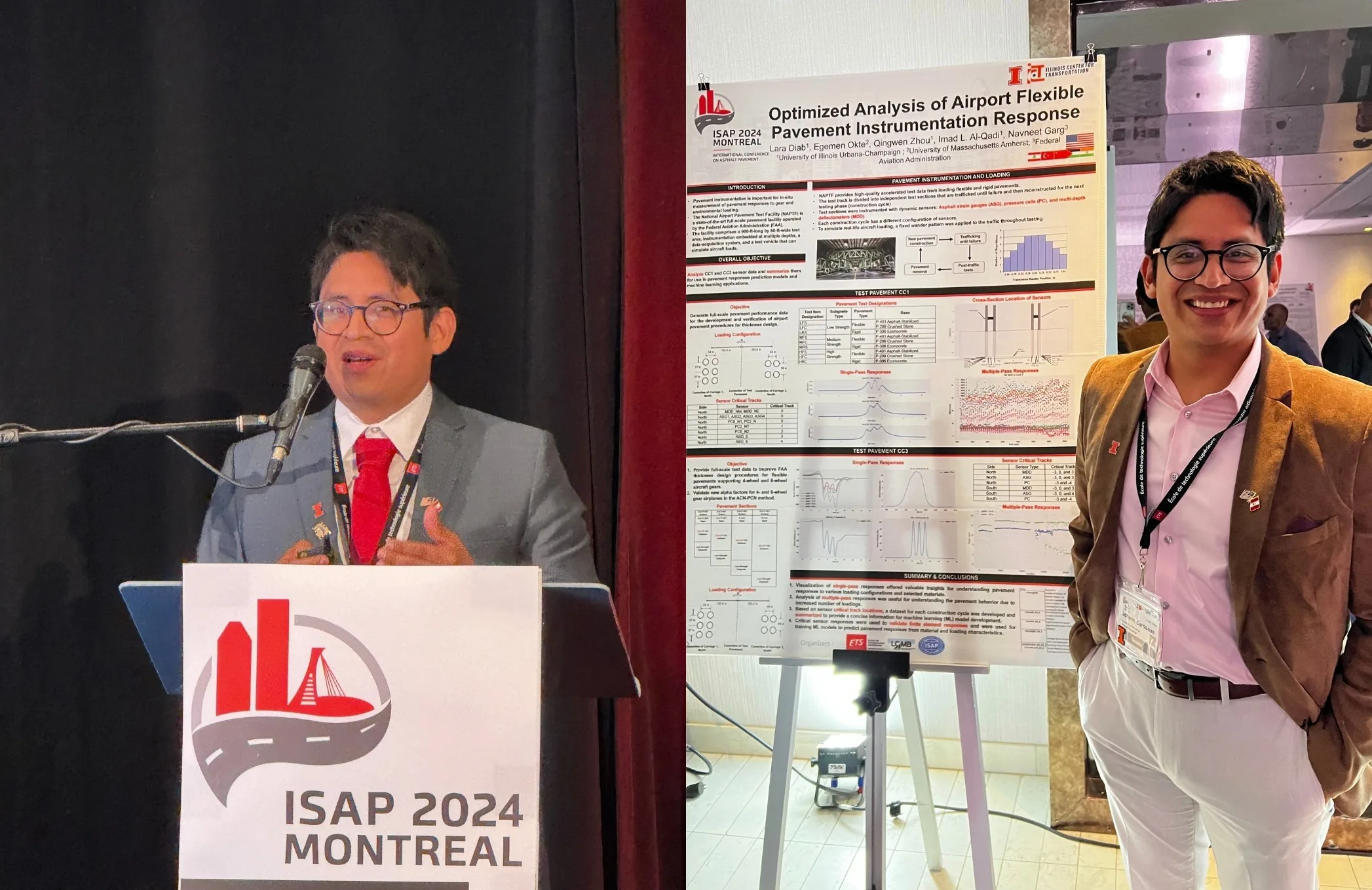
On Wednesday morning, I delivered my podium presentation: "Impact of Vehicular Maneuvering and Dynamic Loading on Flexible Pavements" (see Figure 2). Presenting always comes with nerves, but in this one the audience was genuinely engaged. Also the other presentations were on the same line of research, and the discussions afterward were the kind that actually help you improve your work. The chair of my committee, Salvatore Mangiafico, was also someone I'm really glad I got to meet at this conference. Just a great person to talk to. During the session, I also met Debora, a Brazilian PhD student in France working on tire-pavement interaction, and it was great to learn about the closed-form approach she was developing to predict contact stresses. I have cited her a couple of times ever since. People tend to get impressed by the sophistication of our numerical models, but not everyone realizes that they require a steep learning curve and significant computational resources to be used.
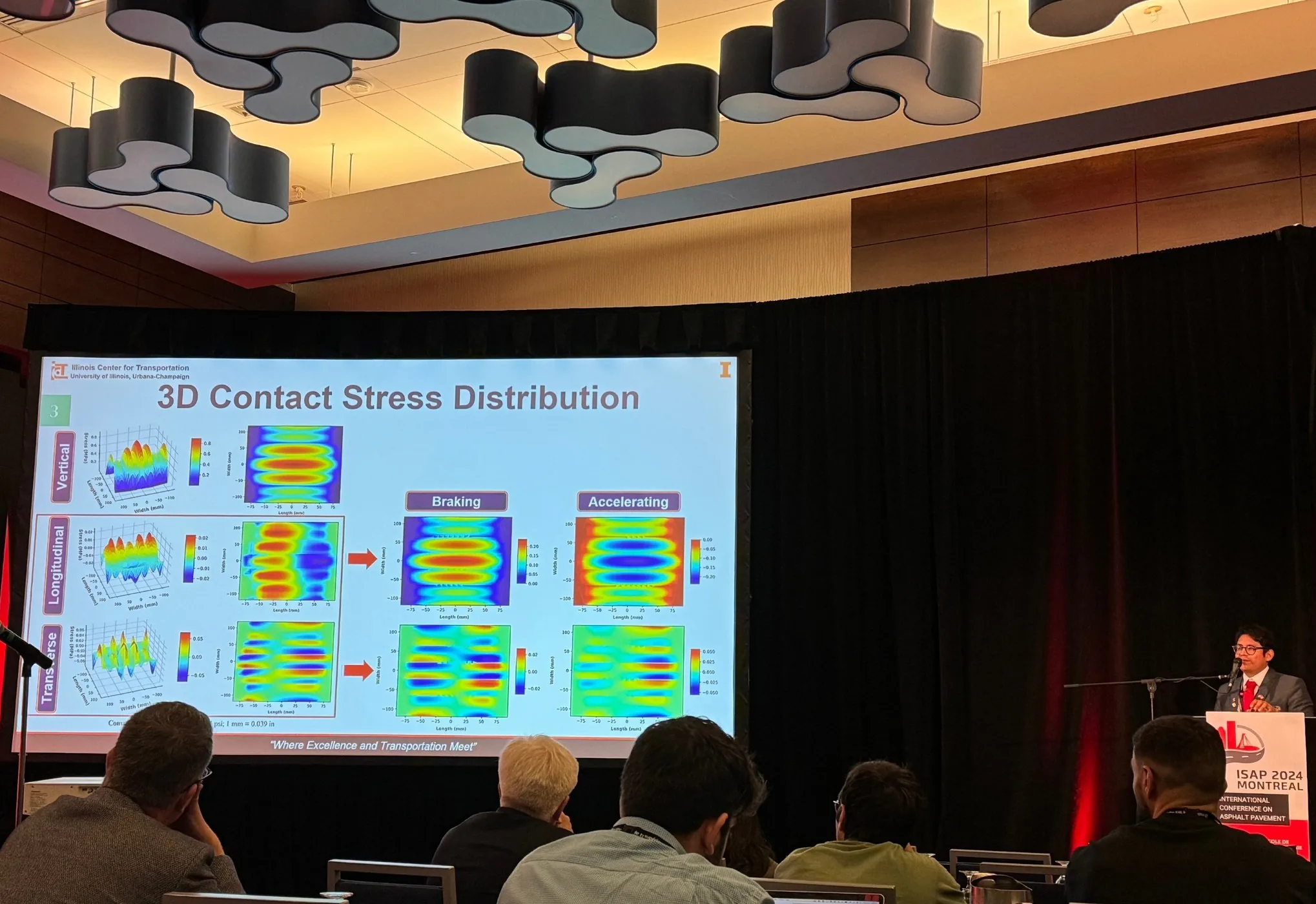
Seeing my slide projected at full scale, with the contact stress distribution patterns side by side (see Figure 3), I remember focusing on explaining how the dynamic loading effects were incorporated into the model, and how they influenced the pavement responses. I also highlighted the practical implications of our findings for pavement design and maintenance, especially in the context of increasing traffic loads from emerging vehicle technologies. Looking out at the audience, I could see nods of understanding and interest, which is always rewarding as a presenter. After the presentation, I engaged in discussions with several attendees who had questions about our methodology and results. I think this presentation was an inflection point in my delivery. Generally, I tend to speak quickly when I'm nervous, but this time I consciously slowed down, focusing on clarity and engagement. It felt like a more polished performance, and I received positive feedback from Prof. Al-Qadi afterward. As usual, my ICT colleagues were there to support me during the presentation. This is how we all manage to capture these moments. One should only focus on looking good for the camera!
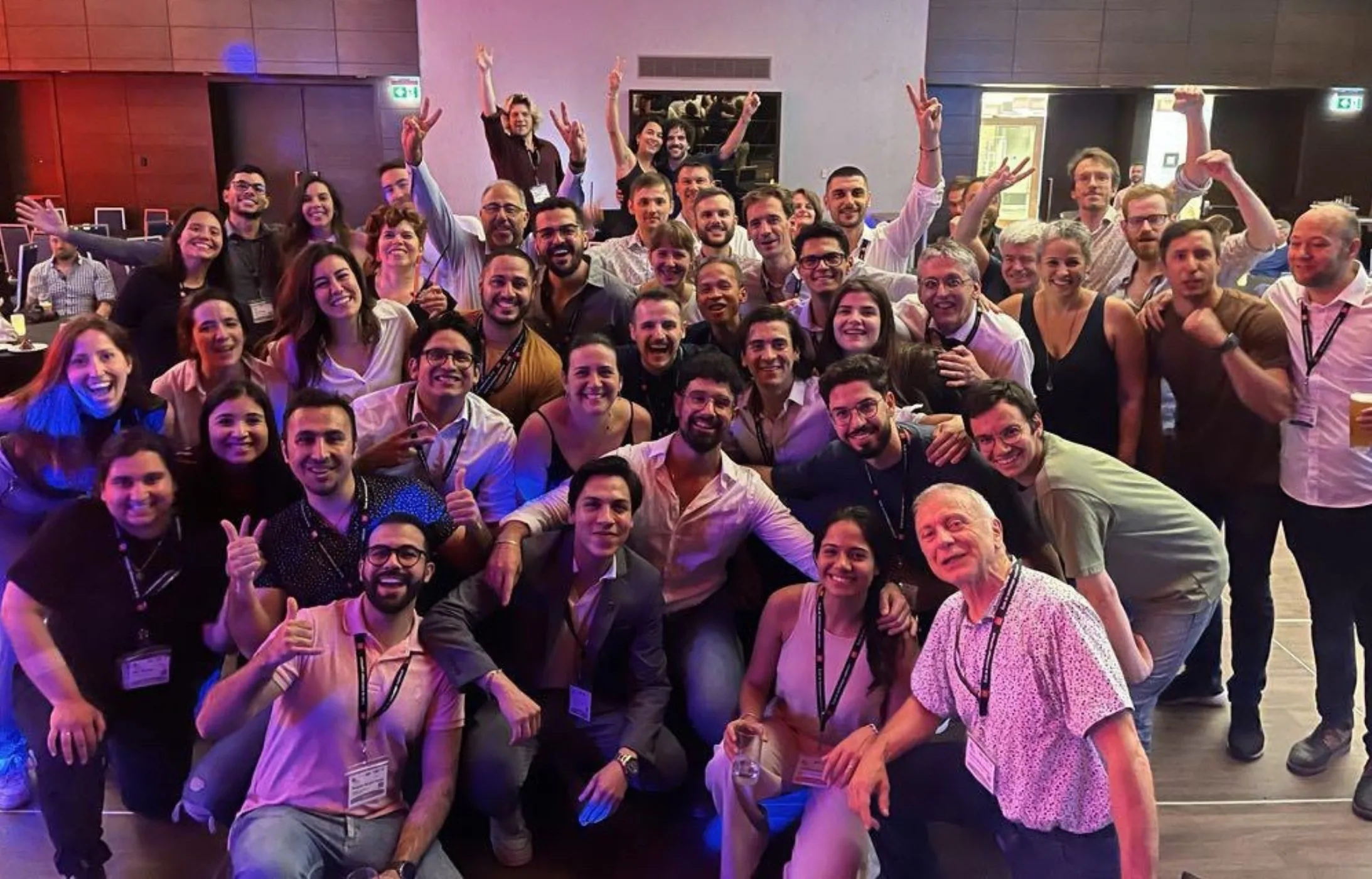
And then...the closing ceremony happened. A DJ literally broke in and the party started. It was surreal to see all these researchers and professors, who you normally only see in serious technical settings, suddenly out on the dance floor. It was the kind of ending that makes a conference feel a bit more human, not just academic. By the way, I learned this is quite common in Canadian conferences (and also in Europe). In th US, we usually have a more formal closing session. The picture in Figure 4 captures the energy of the moment, with attendees letting loose and celebrating the conclusion of a successful conference. We ended up staying a few extra days after the conference because, by pure luck, that weekend was the F1 Grand Prix at Circuit Gilles Villeneuve. The timing couldn't have been better.