ICT R27-252: Impact of Commercial Electric Vehicles on Flexible Pavement Performance
Principal Investigator(s): Angeli Jayme,
Jaime Hernandez
Courtesy Advising: Imad L. Al-Qadi
ICT R27-252 was conducted in cooperation with the Illinois Center for Transportation (ICT), the Illinois Department of Transportation (IDOT), and the U.S. Department of Transportation, Federal Highway Administration (FHWA). The final technical report of the project was published in May 2025 and can be publicly accessed here.
Please reference as follows if you wish to cite this work:
- Hafeez M., Al-Qadi I., Cardenas J., Jayme, A. and Hernandez, J. (2026) Electric Truck Adoption: Infrastructure Energy Burden and Economic Impacts. ASCE Journal of Transportation Engineering: Part B, Pavements. https://doi.org/10.1061/JPEODX.PVENG-2138
- Cardenas J., Jayme, A., Hernandez, J. and Al-Qadi I. (2026) Quantification of Truck Electrification Damage to Flexible Pavements. Transportation Research Record, 0(0) https://doi.org/10.1177/03611981261473504
- Jayme, A., Cardenas J., Hernandez, J. and Al-Qadi I. (2026) Relative Flexible Pavement Distress due to Heavy-Duty Electric Trucks. Transportation Research Record, 0(0) https://doi.org/10.1177/03611981251404350
- Cardenas J., Jayme, A., Hernandez J., and Al-Qadi I. (2025) Flexible Pavement Damage Quantification for Heavy-Duty Electric Trucks. ASCE Proceedings of the International Airfield and Highway Pavements Conference 2025: Design, Construction, Condition Evaluation, and Management of Pavements. https://doi.org/10.1061/9780784486214.059
- Hernandez J., Jayme, A., Cardenas J., and Al-Qadi I. (2024) Effect of Heavy-Duty Electric Vehicles on Tire-Pavement Contact Forces. ASCE Journal of Engineering Mechanics, 151(1). https://doi.org/10.1061/JENMDT.EMENG-7835
Project Objectives
This project aimed to assess the impact of electric trucks on flexible pavements in Illinois, with a focus on potential changes in pavement structural design. The objectives of this study were as follows:
- Determine the overall impact of increased torque and axle loading of electric trucks on tire-pavement contact stresses compared to internal combustion trucks.
- Quantify flexible pavement responses to electric truck loading.
- Identify the impact of electric truck loading on pavement life-cycle cost analysis and life-cycle assessment.
- Recommend modifications to IDOT's flexible pavement design approach.
Potential Implementation
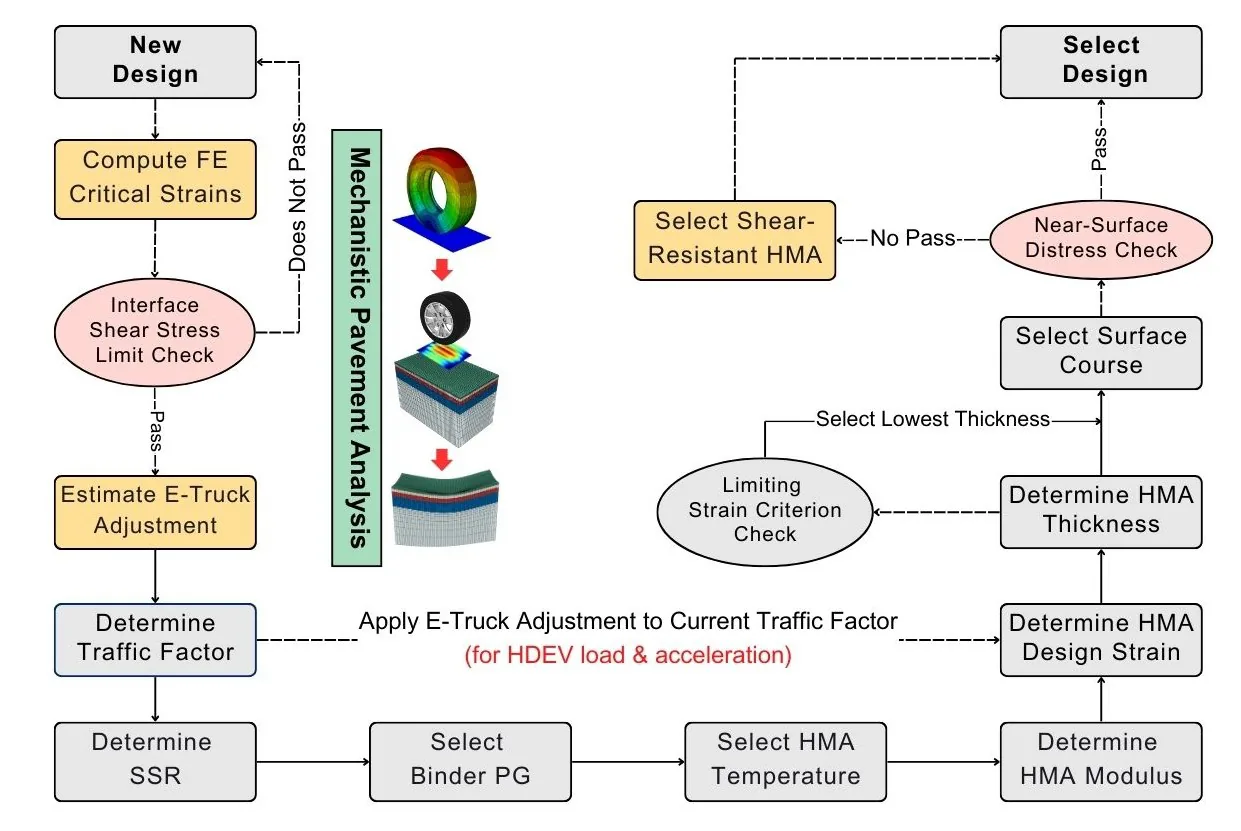
The study proposes a framework for modifying existing flexible pavement design methodologies to better account for the impact of HDEVs in Illinois. This framework would enable IDOT and other agencies to assess pavement distress, life cycle assessment, and life cycle cost analysis as HDEV penetration increases. A damage metric is proposed that evaluates the combined effect of fatigue cracking and near-surface damage (i.e., shear-induced top-down cracking and shoving/rutting). The proposed outcome will allow for the prediction of HDEV-related effects on pavement responses, distresses, costs, and environmental impact. This will empower IDOT and other agencies to optimize structural configurations and material selection. Additionally, the implementation of this framework will help IDOT and other agencies prepare for future HDEV penetration by developing new pavement designs and timely rehabilitation strategies.
Methodology
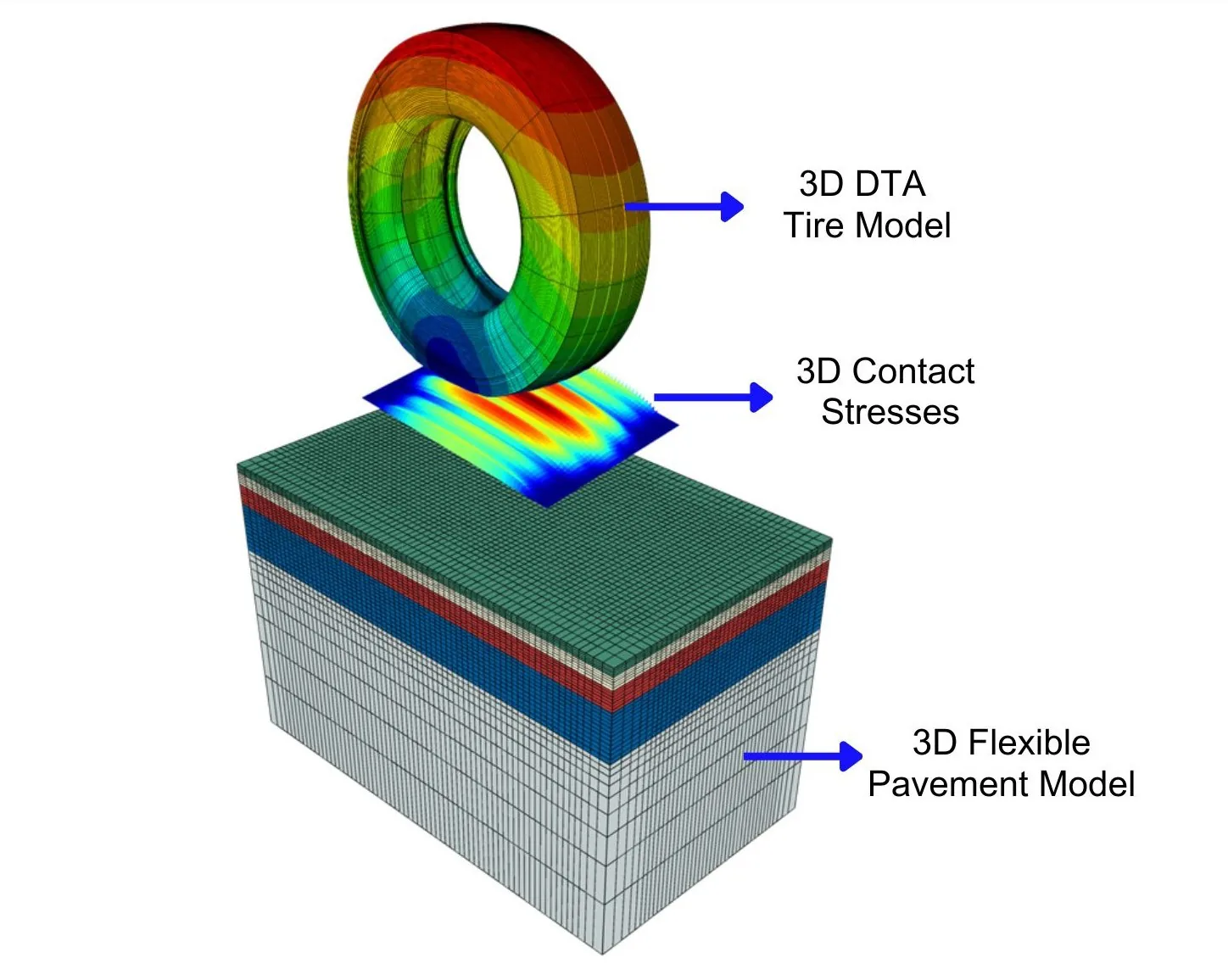
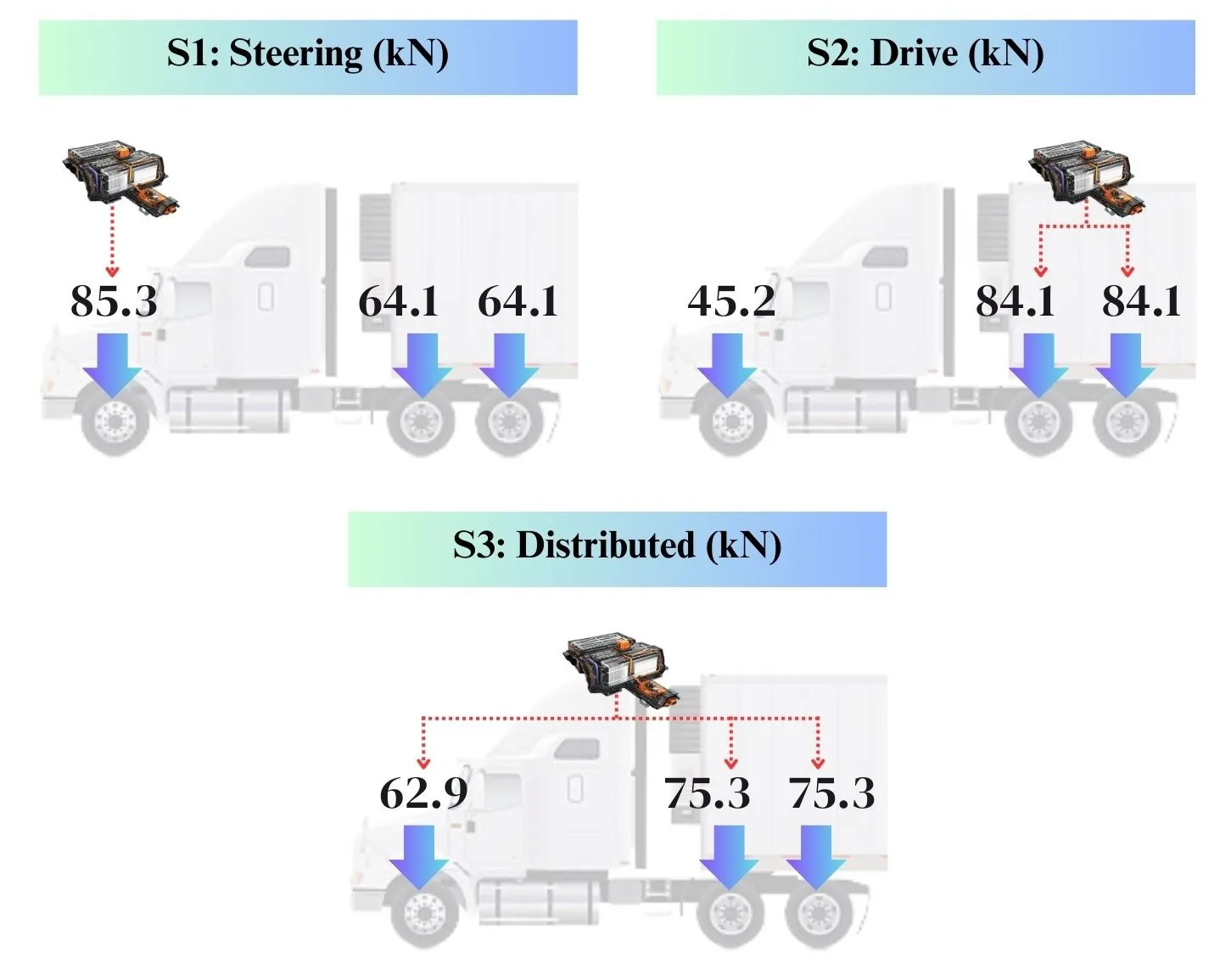
The methodology of the proposed framework included a two-pronged FE model (see Figure 1) to generate tire-pavement contact stress inputs for both IC and HDEV scenarios and to simulate a loaded flexible pavement structure. Figure 2 illustrates the assumed scenarios of battery pack placement in this study: (i) steering axle, (ii) rear tandem axles of the tractor, and (iii) uniformly distributed along the tractor axles.
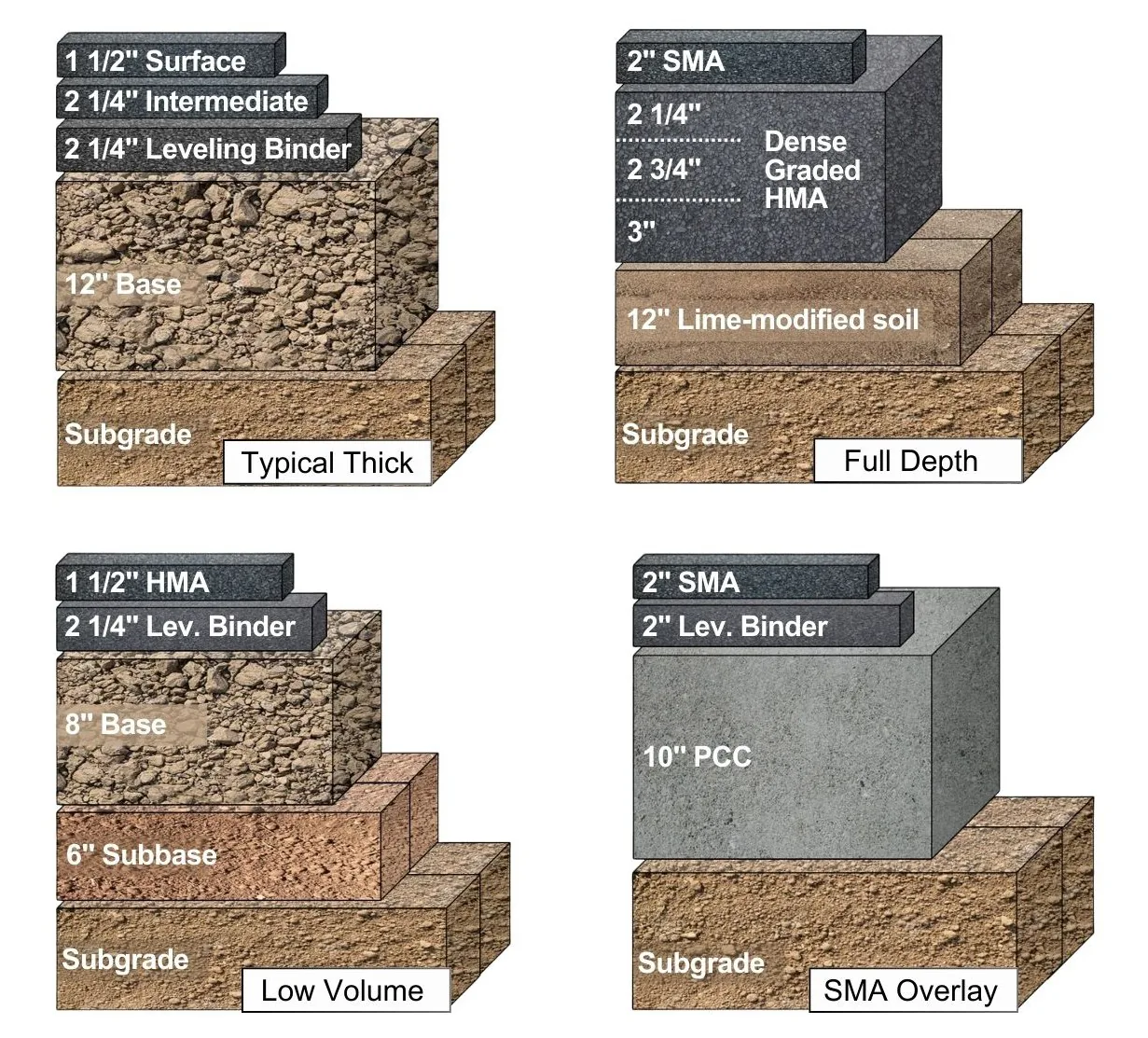
The study evaluated four Illinois pavement structures (see Figure 3). The sections were chosen to evaluate pavemen tresponses for roads likely to experience HDEV traffic, particularly in terms of increased load magnitude and greater torque access.
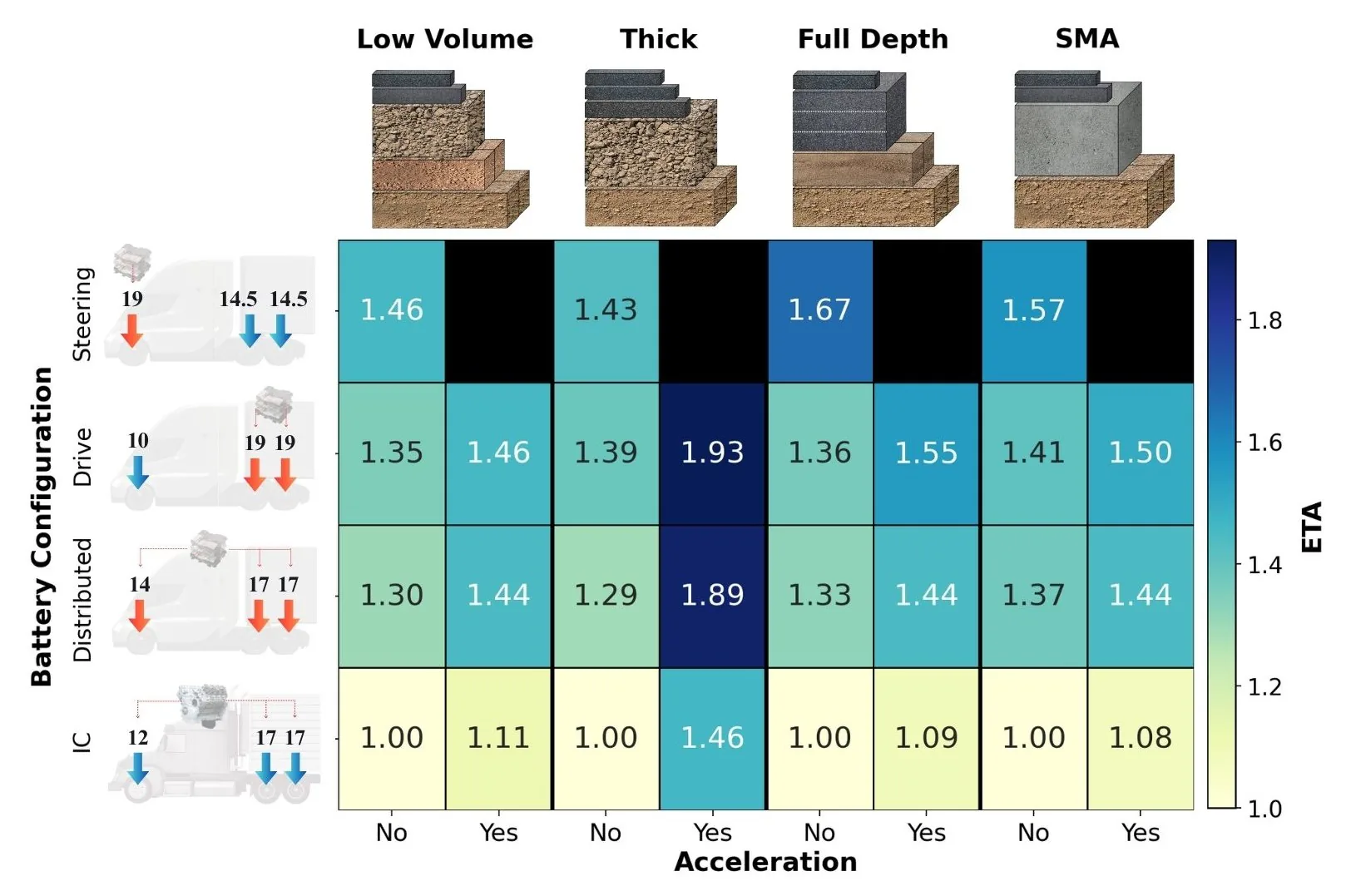
Critical strain outputs were then utilized to estimate the number of repetitions to failure for bottom-up cracking, shear-driven top-down cracking, and shear-driven shoving. A new metric, E-Truck Adjustment Factor (ETA), was proposed to enable a combined distress analysis for full IC and HDEV truck configuration (see Figure 4). Such analysis is vital, as pavement damage is driven by a combination of distress mechanisms, not just one. The new ETA factor scaled the International Roughness Index (IRI) progression curve to define earlier rehabilitation triggers and imposed a means to adjust the traffic factor in IDOT's full-depth mechanistic design.
The framework also offers flexibility to account for other emerging technologies in transportation, such as truck platoons. The presented holistic framework also checked the resulting shear stresses at layer interfaces to ensure that the tack coat strength was not exceeded (see Figure 5).
Findings
Key findings are presented as follows:
- Increased impact on pavement due to HDEV load and acceleration.
- A 1-kip tire load would result in a significant increase in pavement critical strains.
- Acceleration rate impacts traditional critical strains at a minimum.
- Acceleration affects near-surface horizontal shear strain.
- Resulting critical strains are pavement-structure dependent.
- E-truck adjustment (ETA) revealed the following multipliers to the number of repetitions to failure for a full truck for the four pavement sections, relative to the baseline IC scenario of each pavement structure .
- Full Depth: 1.22, 1.31, and 1.41 for HDEV batteries that were evenly distributed, placed on the drive axle only, and steering axle only, respectively.
- Low Volume: 1.23, 1.23, and 1.23 for HDEV batteries that were evenly distributed, placed on the drive axle only, and steering axle only, respectively.
- Typical Thick: 1.66, 1.72, and 1.21 for HDEV batteries that were evenly distributed, placed on the drive axle only, and steering axle only, respectively.
- SMA Overlay: 1.22, 1.27, and 1.33 for HDEV batteries that were evenly distributed, placed on the drive axle only, and steering axle only, respectively.
- The ETA values can be used as a modification for the traffic factor used in the IDOT full-depth mechanistic design.
- HDEVs could reduce pavement life cycle.
- Use of HDEV may require an increase in pavement design thickness using the IDOT approach.
- HDEV uses more energy.
- Acceleration increases the cost for pavements under HDEV loading.
- Emissions decreased with greater HDEV penetration.
Conclusions
This study underscores the importance of holistically evaluating flexible pavements subjected to new technologies, such as HDEV, from pavement response/damage, LCA, and LCCA. The impact of HDEVs not only factors load increase from battery placement and higher acceleration, but also pavement structural configuration, which further defines the governing distress. The following conclusions are drawn:
- Avoid placing the HDEV's battery on the steering axle. It leads to the highest combined distress of bottom-up fatigue cracking, shear-induced top-down cracking, and shear-induced shoving. This extreme scenario is unlikely to be a choice for original equipment manufacturers. The HDEV evenly distributed scenario may impost the lowest costs incurred.
- Consider nontraditional critical strains in assessing HDEV impact on flexible pavement to control cracking and shoving, including horizontal and vertical shear strains within HMA layers. A modification for the traffic factor in IDOT pavement design using ETA is recommended to account for such impacts.
- Increasing HDEV penetration would increase pavement rehabilitation frequency and corresponding cost but would reduce overall energy use and corresponding emissions. The associated costs and emissions are pavement-structure dependent and must be analyzed for each pavement project.
- Because of the reduced hauling capacity of HDEVs compared to ICs, additional trips may be required to transport the same amount of freight, leading to increased traffic and required pavement maintenance and rehabilitation. Hence, the traffic level must be modified based on potential HDEV penetration.