The Transportation Research Board Annual Meeting 2026
On the Move: Highlights from the 105th Annual Meeting
We headed to Washington D.C., for the Transportation Research Board (TRB) 105th Annual Meeting from January 12-16, 2026. The TRBAM is a premier gathering of transportation professionals, researchers, and policymakers from around the world. The 105th edition of the meeting had everybody on alert as TRB had undergone a major reorganization of its prior standing technical committee structure, adopting a new committee framework.
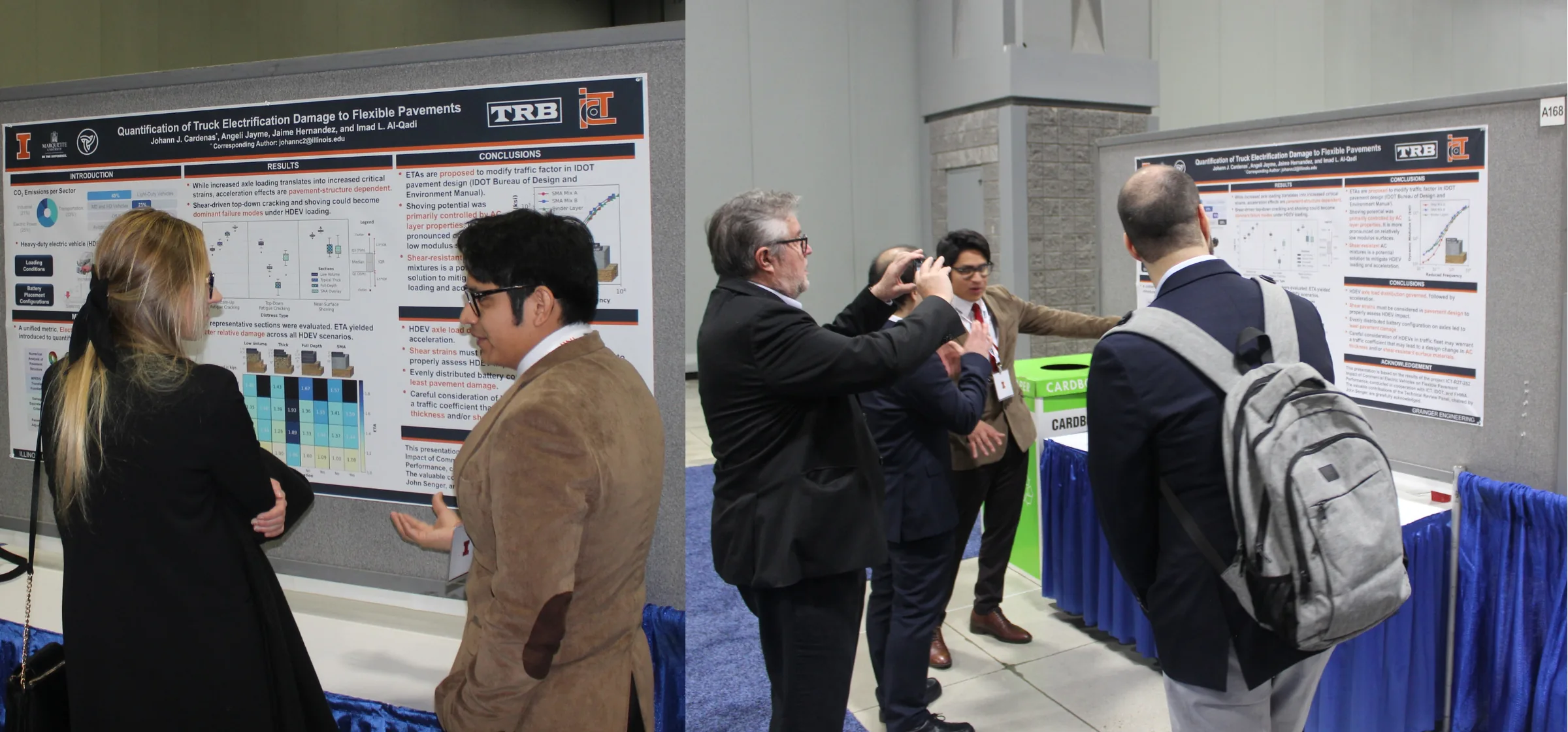
Two posters from IDOT project R27-252: "Impact of Commercial Electric Vehicles on Flexible Pavement Performance" were presented. See details in Table 1.
Table 1. TRB 2026 Poster Presentations
| Description | Presentation | Authors | Date and Time | Short Abstract |
|---|---|---|---|---|
|
Poster Session 4082 Accelerated Pavement Testing Materials, Pavements A168 |
Quantification of Truck Electrification Damage to Flexible Pavements | Johann Cardenas Angeli Jayme Jaime Hernandez Imad Al-Qadi |
Convention Center, Hall A Wednesday, Jan 14 4:00 PM - 5:45 PM ET |
Download Here |
|
Poster Session 4085 Pavement Rehabilitation Materials, Pavements B414 |
Infrastructure Energy Burden and Economic Impacts due to Electric Truck Adoption | Murryam Hafeez Imad Al-Qadi Johann Cardenas Angeli Jayme Jaime Hernandez |
Convention Center, Hall A Wednesday, Jan 14 4:00 PM - 5:45 PM ET |
Download Here |
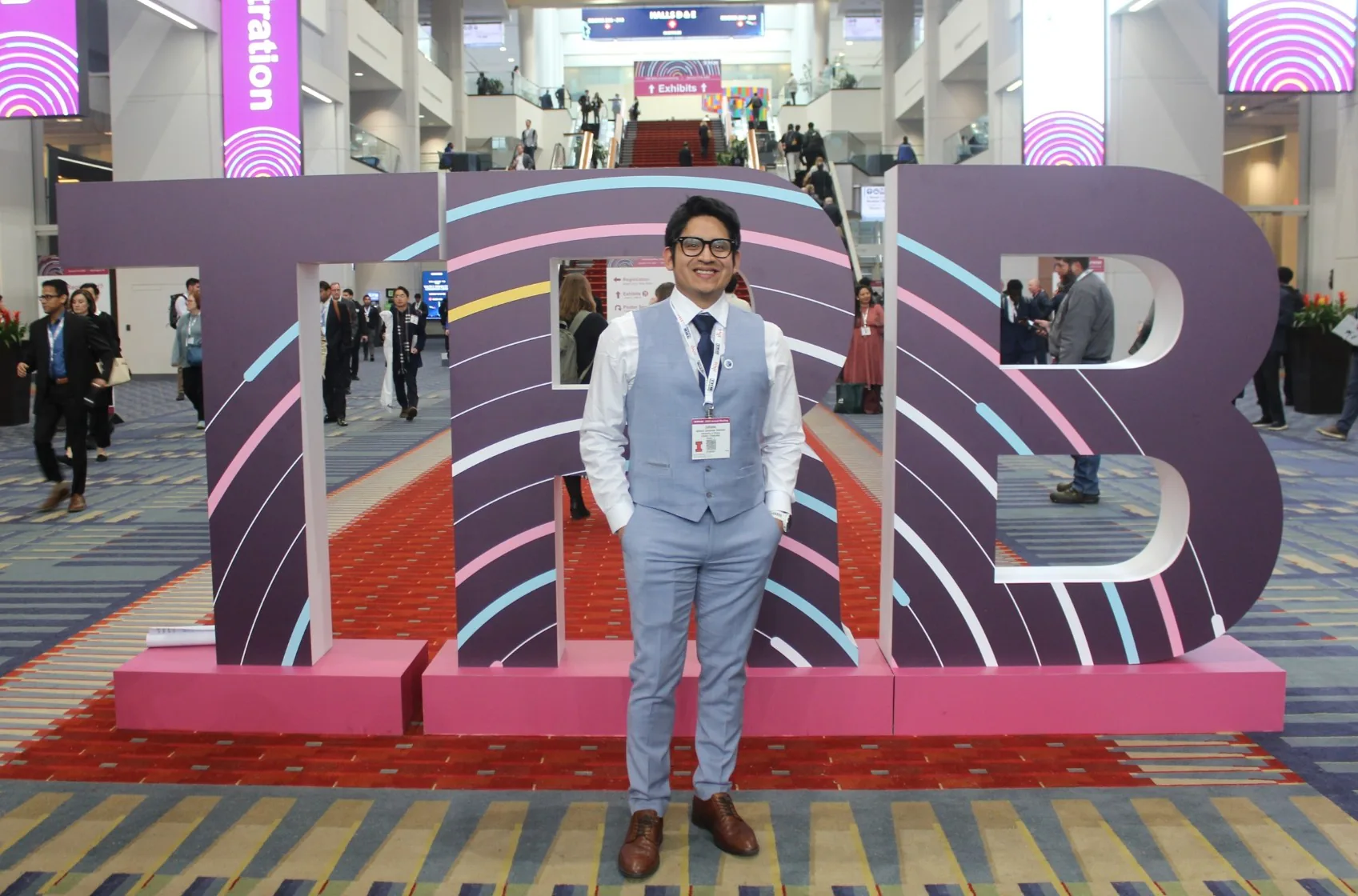
This was my 5th time attending TRB. I did notice the fewer number of attendees compared to previous years. Colleagues that would usually attend TRB were not there this time. Among the academic community, there is clearly a disagreement with the new committee structure. When I was preparing my program as an attendee, I found it difficult to identify sessions of interest as most of them were now industry-focused rather than research-focused. Highly-technical submissions were mostly grouped within the poster sessions, which made it difficult to attend multiple sessions of interest happening at the same time. A positive change though, was the inclusion of small breaks between sessions, which allowed attendees to network and visit exhibitor booths, or to simply take a breather. As in previous years, the Walter E. Washington Convention Center was a great venue for the event (see Fig 1), and I could not miss the chance to take the traditional photo of the TRB sign at the entrance.
The Illinois Reception
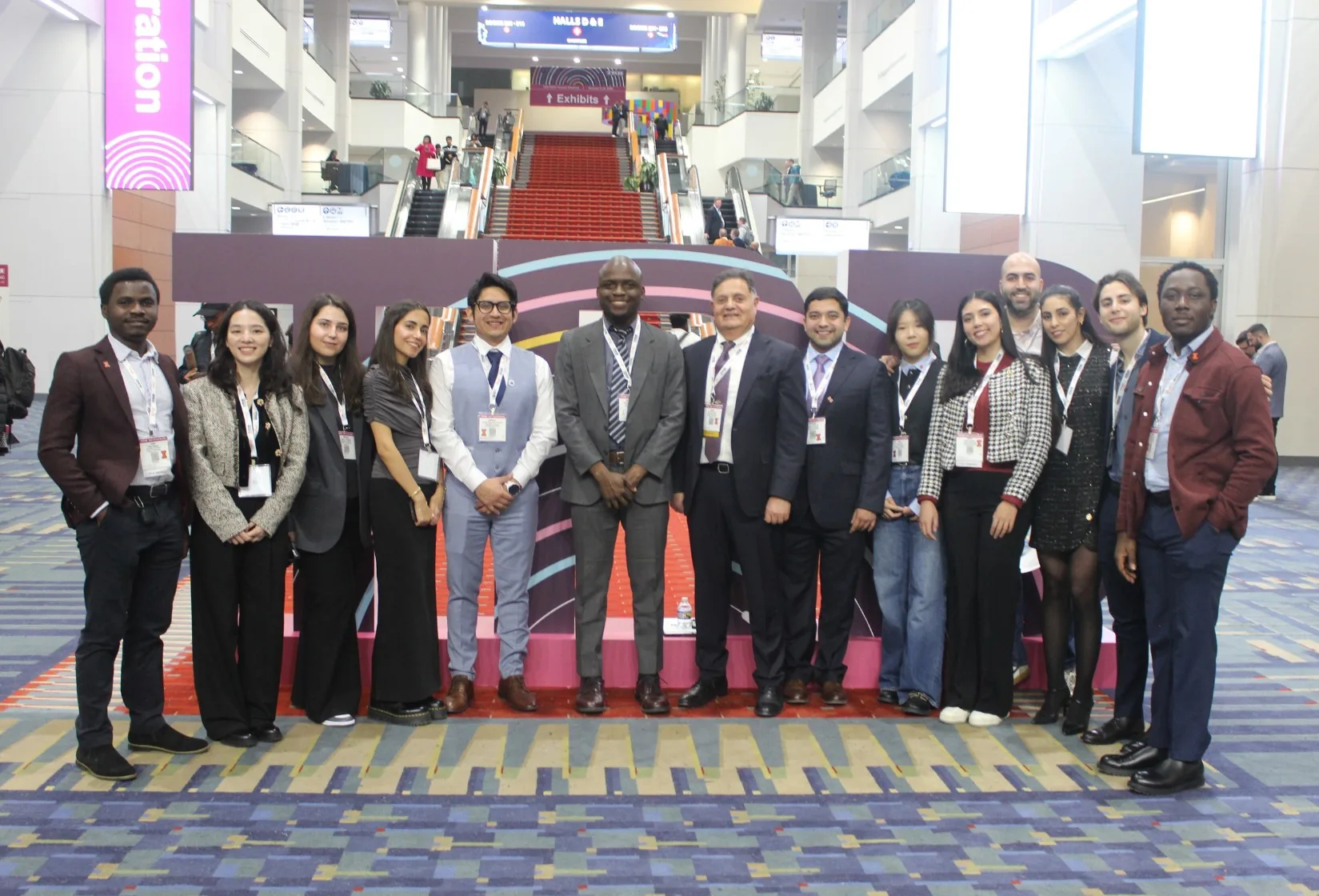
Our group arrives earlier than most attendees to be on time for the APSE meeting on Saturday afternoon. However, it is on Sunday night that we get to see all the familiar faces as they gather for the Illinois Reception (see Fig 2). Illinois has a large presence at TRB, with many faculty members, researchers, and students attending the event. During the reception, alumni, colleagues , and friends from other academic institutions get together to network.
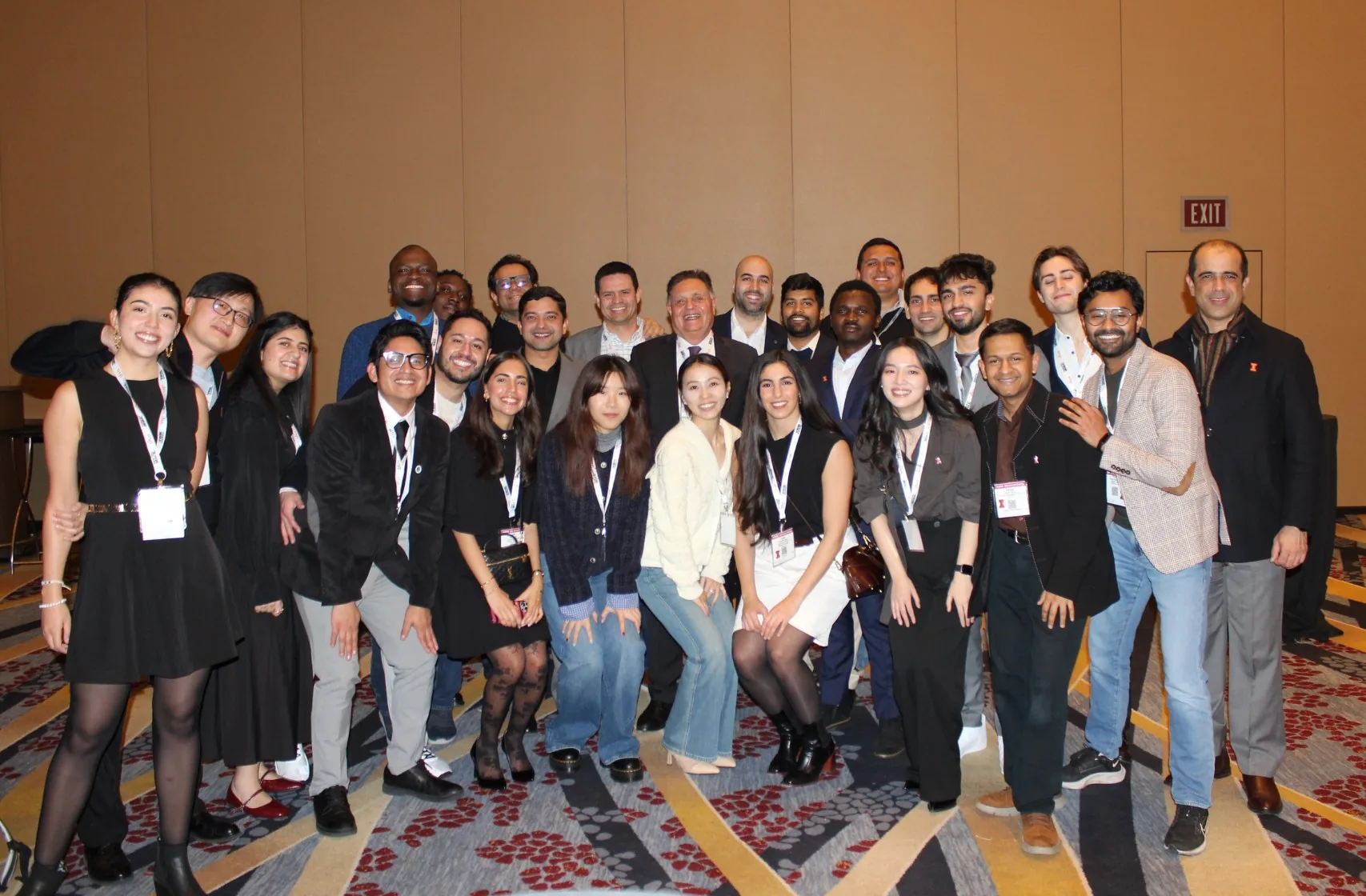
It's hard to believe that in most cases, I get to see people that attend the reception only once a year at TRB. There is so much catching up to do! I was introduced to new colleagues, and reconnected with old friends. Meeting new students from other research groups sends me back in time to my own first experience at TRB as a graduate student. People that I met at the Illinois Reception in 2022 are now friends, and senior graduate students themselves. Time does fly. It's great to be able to guide them through their own TRB experience now. It took me some time to figure out how to navigate TRB, and I can certainly say that this TRB was the best one yet for me. There is no shyness in approaching new people, or hesitation in asking questions during sessions. Everyone is eager to learn and share their knowledge. I have found myself being the one providing answers to some of the questions asked by other attendees, which is a great feeling.
Poster Session
Unlike previous years, where my lectern presentations or poster sessions took place early on Monday or Tuesday, this time our sessions were scheduled for Wednesday afternoon, at the very end of the conference. This ended up being a good thing.
Contrary to lectern sessions, I think posters do not require much preparation in advance, other than having the poster printed and ready to go. One can generally improvise and adapt to the audience's questions on the spot, as the sessions are more informal and distended in nature. After working on this project for so long, and having presented preliminary findings at various conferences, I was extremely comfortable discussing the topic with other attendees. It was great to see the interest generated by our work, especially from students and early-career professionals. Many of them are eager to explore the topic of electric trucks further, and I was happy to provide guidance and suggestions for their own research.
While I presented the first poster on quantifying pavement damage, my colleague and friend Murryam led the second poster on the economic impacts of electric truck adoption. It was great to have the research team together. In Fig 4, from left to right, me (Johann Cardenas), Murryam Hafeez, Prof. Jaime Hernandez, and Prof. Imad Al-Qadi posed for a picture right at the end of our poster session. Sadly, we did not get to see Angeli, our PI and project lead, at TRB this year as she had to abruptly cancel her trip due to personal reasons. These posters were the final chapter of our project, and it was great to be able to share our final findings with the transportation research community. Having Prof. Al-Qadi and Hernandez there to support us was quite meaningful as well. They are active members of the transportation research community, and their presence helped to engage more attendees to visit our posters! Poster sessions can make you feel tense if people do not stop by to ask questions, but luckily we had a steady flow of visitors throughout the session.
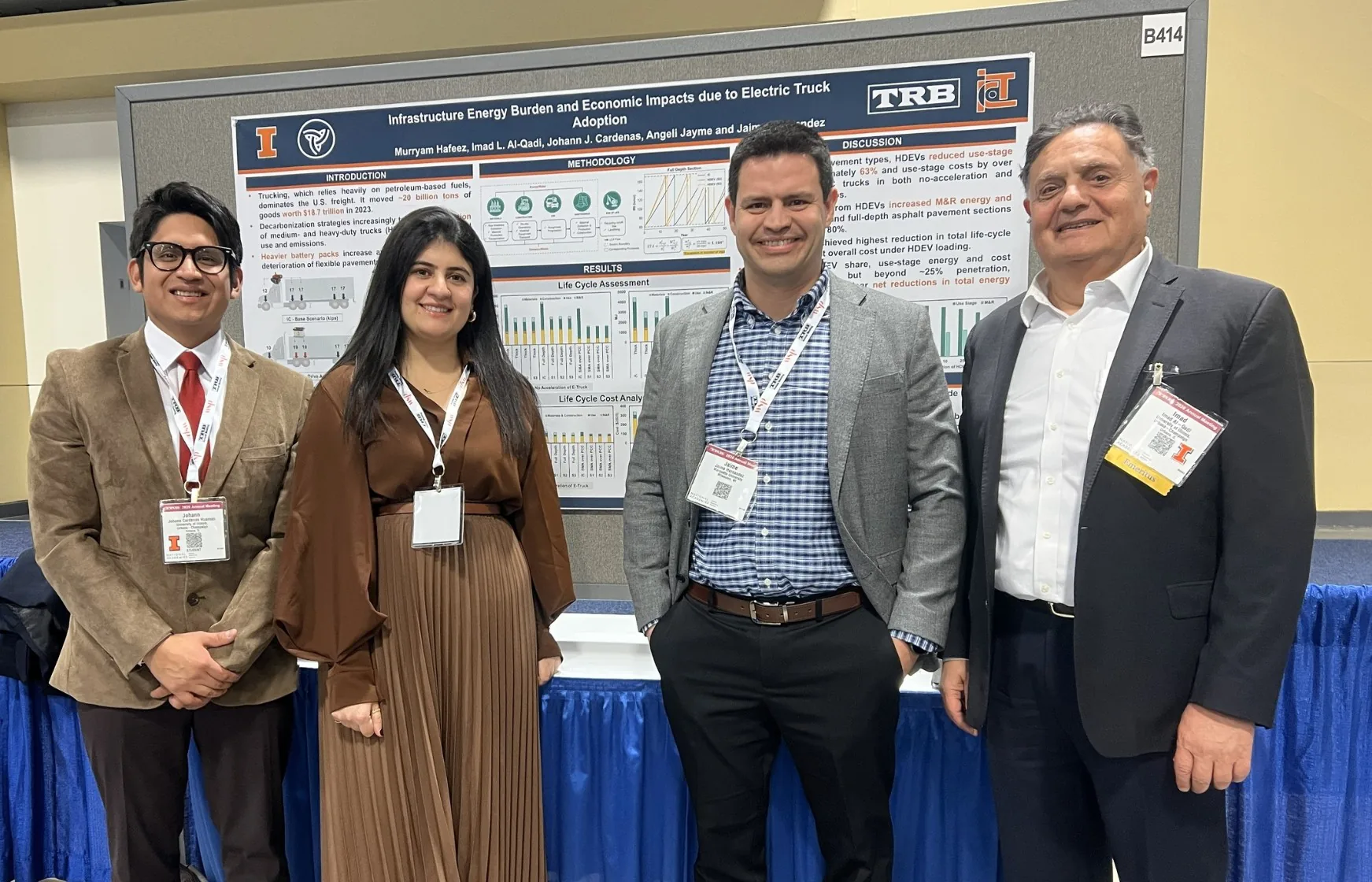
Unfortunately, we are missing Angeli in this picture!
Final Comments
With so many changes made to the program structure, it is hard to say how successful this TRB edition was. There were definitely some positive aspects, but overall I felt that the event lost some of its technical rigor. Only time will tell if this new format is here to stay, or if TRB will revert back to its prior structure.
TRB is the biggest stage for us to present our research, and I am grateful for the opportunity to have done so this year. The new students in our research group got to experience their first TRB, and I am sure they will cherish the memories made during this trip. As for me, I am already looking forward to TRB 2027, which might be my last one! The plan is to finalize at least two submissions for next year, and one of them will be my ACRP Graduate Research Award paper. I learned that many friends will be graduating this 2026, and might not be able to attend next year's TRB. They were part of my own experience for the past few years, and it will be sad to not see them there next time. Hopefully, we can all stay in touch and continue collaborating on future research projects. It is my expectation to transition into the industry after graduation, and God willing, I will land in a company that is actively involved in TRB, so I can keep attending future editions.